
Gluten-Free Longevity Noodles

Published Feb 12, 2026
This post contains affiliate links. Please see our disclosure policy.
A Symbolic Dish for the New Year (and Every Day)
Longevity noodles aren’t just a delicious meal — they’re a tradition rooted in centuries of symbolism and celebration. Traditionally served during Chinese New Year, birthdays, and milestone celebrations, these long, uncut noodles represent long life, prosperity, and good fortune. And while the meaning runs deep, the dish itself is wonderfully simple, comforting, and endlessly adaptable.
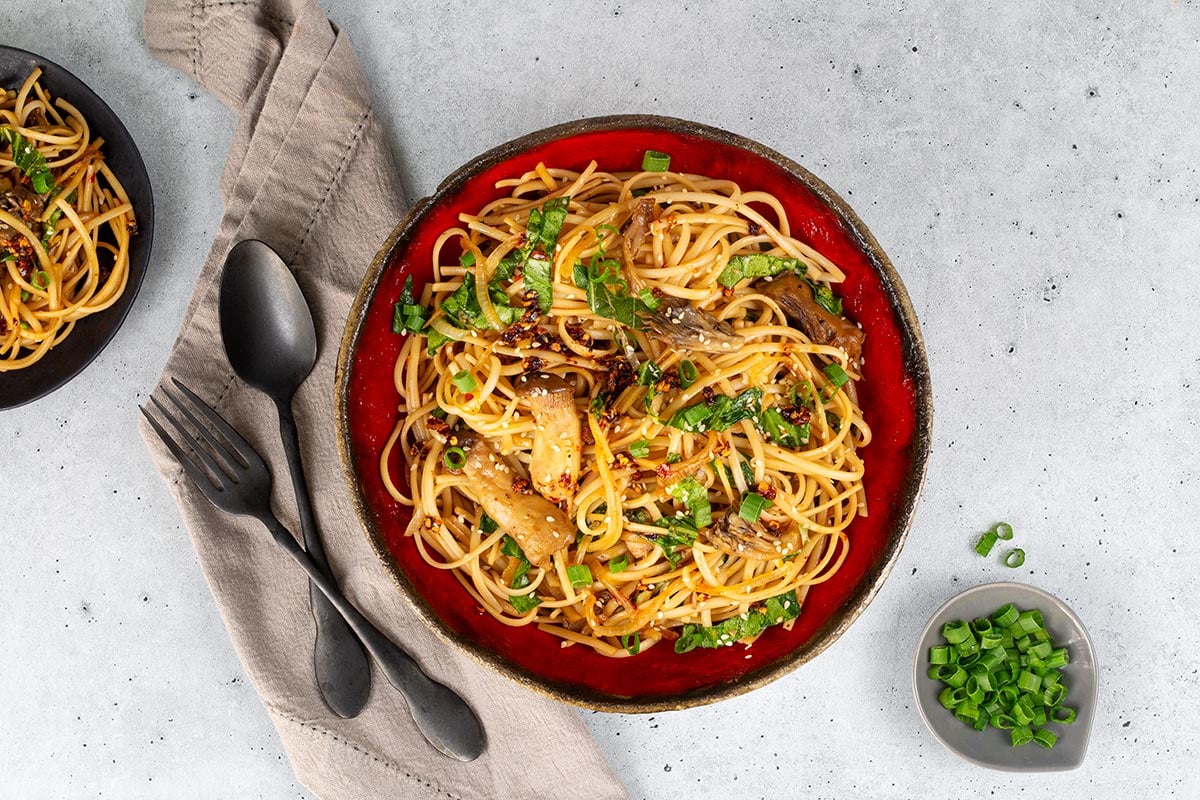
Table of Contents
- A Symbolic Dish for the New Year (and Every Day)
- The History of Longevity Noodles
- Why Longevity Noodles Are Served on Chinese New Year
- How We Made Longevity Noodles Gluten-Free
- What Makes This Dish Special
- What You’ll Need
- Tips for Serving Longevity Noodles
- A Modern Take on a Timeless Tradition
- Gluten-Free Longevity Noodles Recipe
So, naturally, we wanted to honor that tradition while also making it gluten-free, so everyone can enjoy this meaningful dish without missing out. As a result, these Gluten-Free Longevity Noodles deliver all the flavor, texture, and symbolism of the original — just without the wheat.
The History of Longevity Noodles
Longevity noodles, often called Yi Mein or Chang Shou Mian, have been part of Chinese culture for thousands of years. Historically, they were served to celebrate long life, especially during birthdays and the Lunar New Year. The key detail? The noodles are meant to stay long and unbroken, symbolizing a long, uninterrupted life.
Because of this symbolism, the noodles are traditionally not cut while cooking or eating. Instead, they’re gently lifted, twirled, and enjoyed as-is. Over time, this dish became a staple at celebratory tables — not just for its meaning, but also because it’s simple, nourishing, and deeply satisfying.
Why Longevity Noodles Are Served on Chinese New Year
Chinese New Year is all about setting intentions for the year ahead. Foods served during the celebration are chosen carefully, each representing something positive — wealth, happiness, unity, or long life. Longevity noodles, therefore, are a natural fit.
They symbolize:
- Long life and good health
- Continued happiness and prosperity
- A smooth path forward in the year ahead
Because the noodles are long, they visually reinforce the idea of longevity. And since they’re often served family-style, they also represent togetherness and shared blessings.
How We Made Longevity Noodles Gluten-Free
Traditionally, longevity noodles are made with wheat-based noodles, which obviously isn’t an option for those avoiding gluten. However, that doesn’t mean the tradition has to stop there.
Instead, we swapped in gluten-free spaghetti or linguine, which closely mimics the long, slurpable shape of traditional longevity noodles. Just as importantly, these gluten-free noodles hold up well when tossed with sauce and vegetables, meaning you still get that satisfying chew and silky texture.
Meanwhile, bold, naturally gluten-free ingredients like tamari, toasted sesame oil, fresh ginger, garlic, mushrooms, and bok choy bring depth, umami, and balance. Together, they create a dish that feels authentic, vibrant, and deeply comforting — without relying on gluten.
What Makes This Dish Special
What truly sets these Gluten-Free Longevity Noodles apart is how effortlessly they bridge tradition and modern dietary needs. On one hand, you’re honoring a centuries-old custom. On the other hand, you’re serving a dish that’s:
- Gluten-free
- Plant-based and vegan
- Packed with vegetables
- Full of bold, savory flavor
Additionally, the noodles are quick to prepare, making them perfect not only for Chinese New Year, but also for busy weeknights when you still want something meaningful and nourishing.
What You’ll Need
To make these Gluten-Free Longevity Noodles, you’ll need a handful of simple, thoughtfully chosen ingredients that come together effortlessly. Just as importantly, each one helps honor the tradition behind longevity noodles while keeping the dish completely gluten-free.
- Gluten-free long pasta, such as spaghetti or linguine, to mirror the traditional long noodle shape
- Gluten-free tamari or soy-free seasoning sauce for savory depth
- Marukan Organic Rice Vinegar, which adds gentle acidity and balance without overpowering the dish
- Toasted sesame oil for rich, nutty aroma
- Fresh garlic and ginger to build bold, aromatic flavor
- Mushrooms for umami and heartiness
- Leafy greens like bok choy or spinach for freshness and color
- Green onions for garnish and a mild onion bite
- Optional chili crisp or red pepper flakes for gentle heat
Together, these ingredients create a dish that’s comforting, symbolic, and approachable — while still staying true to the meaning and tradition behind longevity noodles.
Tips for Serving Longevity Noodles
Although longevity noodles are often enjoyed during the New Year, they’re truly welcome any time of year. Still, if you want to lean into tradition, here are a few helpful tips:
Keep the Noodles Long
Whenever possible, avoid breaking or cutting the noodles. This keeps the symbolism intact and makes the dish feel more special.
Serve Family-Style
Because longevity noodles represent shared blessings, serving them in a large bowl encourages togetherness and connection.
Add Garnishes Thoughtfully
Green onions, sesame seeds, and chili crisp not only add flavor and texture, but they also make the dish visually inviting — which matters during celebratory meals.
A Modern Take on a Timeless Tradition
Ultimately, these Gluten-Free Longevity Noodles prove that food traditions don’t have to be left behind when dietary needs change. Instead, they can evolve — becoming more inclusive while still honoring their roots.
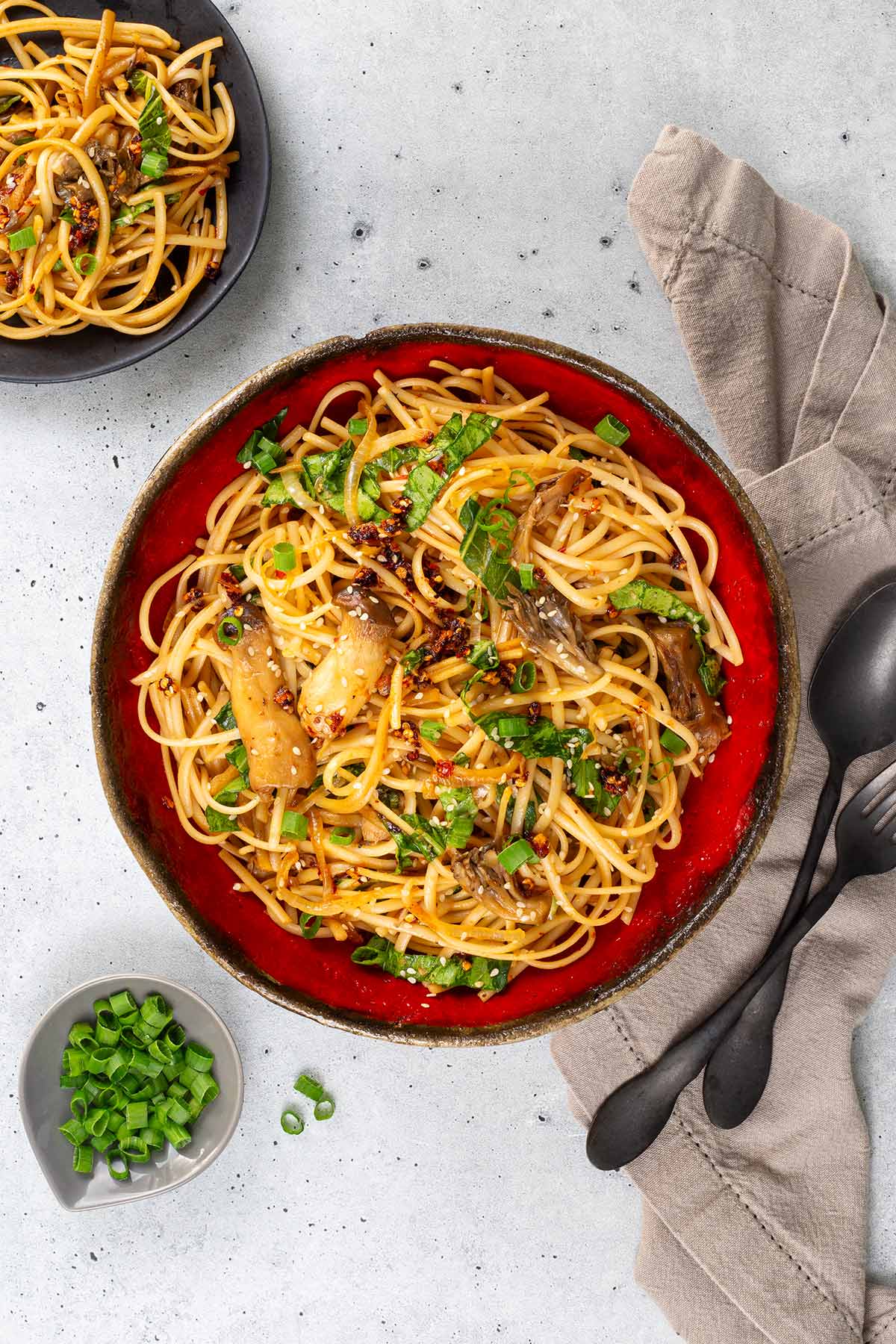
Whether you’re welcoming the Lunar New Year, celebrating a birthday, or simply craving a comforting bowl of noodles, this dish delivers on every level. It’s symbolic yet approachable, traditional yet modern, and most importantly, something everyone at the table can enjoy.
And honestly, that feels like good fortune all on its own.
For more recipes using Marukan’s premium vinegars and sauces, try:
Mediterranean-Style Dense Bean Salad
Vegan Watermelon Poke Bowls
Eggs Benedict with Ponzu Hollandaise
Gluten-Free Longevity Noodles
Ingredients
- 1 pound gluten-free spaghetti or gluten-free linguini
- 3 tablespoons avocado oil plus more for the noodles, divided
- 3 tablespoons Marukan Organic Rice Vinegar
- 3 tablespoons tamari or gluten-free soy sauce
- 2 tablespoons toasted sesame oil
- 1 tablespoon chili garlic sauce, (more or less, depending on how spicy you want it)
- 1 medium onion, thinly sliced
- 2 tablespoons fresh ginger, minced or grated
- 4 cloves garlic, minced
- 12 ounces assorted mushrooms, sliced
- 3 – 4 bok choy, thinly sliced
- 1 small bunch green onions, thinly sliced
- 1 teaspoon sesame seeds, for garnish
- Chili crisp for garnish, optional
Instructions
- Cook the gluten-free spaghetti or linguini according to package directions until just tender. Drain, rinse briefly with cool water to prevent sticking, and toss with a small amount of oil. Set aside.
- In a small bowl, whisk together the Marukan Organic Rice Vinegar, tamari, toasted sesame oil, and chili garlic sauce. Set aside.
- Heat one tablespoon of the avocado oil in a wok or large skillet over medium-high heat until hot. Add the sliced onion, ginger, and garlic and stir-fry until fragrant and softened, about two to three minutes. Transfer to a bowl.
- Add another tablespoon of oil to the skillet and cook the mushrooms until golden and their moisture has evaporated, about four to five minutes.
- Add the remaining tablespoon of vegetable oil, the cooked noodles, bok choy, and the onion mixture back to the skillet. Pour in the sauce and toss gently until everything is evenly coated and heated through.
- Remove from heat, garnish with green onions and sesame seeds, and chili crisp if desired, and serve immediately.
Nutrition
Nutrition information is automatically calculated, so should only be used as an approximation.