
Admittedly, navigating the grocery store or your pantry on a gluten-free diet can feel overwhelming at first, mostly owing to confusing labels and hidden ingredients. This comprehensive gluten-free ingredient guide serves as your one-stop reference for safe foods, foods to avoid, label-reading tips, cross-contamination prevention, and practical substitutions for cooking and baking.
Ultimately, whenever you’re uncertain, always check labels. Gluten Free & More, Inc. does not guarantee accuracy about what foods are safe or unsafe for an individual’s diet. Please consult your medical professional for personalized dietary advice.
What is defined as gluten-free?
As of early 2026, the FDA continues to define “gluten-free” as less than 20 parts per million (ppm) of gluten. The agency is currently gathering public input on improving gluten disclosure and cross-contact prevention on packaged foods (comments open through April 2026). However, rules can evolve, so stay vigilant and check labels every time.
Table of Contents
- What is defined as gluten-free?
- What is Gluten? Celiac Disease & Gluten Sensitivity
- How to Read Gluten-Free Labels Like a Pro
- Safe Naturally Gluten-Free Foods
- Unsafe Gluten-Containing Ingredients
- Hidden Sources of Gluten in Common Foods
- Gluten-Free Flour & Ingredient Substitutions
- Cross-Contamination & Kitchen Safety
- Bonus Resources & Recipes
- Frosting Recipe
- Air Fryer Gluten-free Falafel Balls Recipe
- Gluten Free Grain Free Corn Free Cornbread Recipe
- ready to get cooking?
What is Gluten? Celiac Disease & Gluten Sensitivity
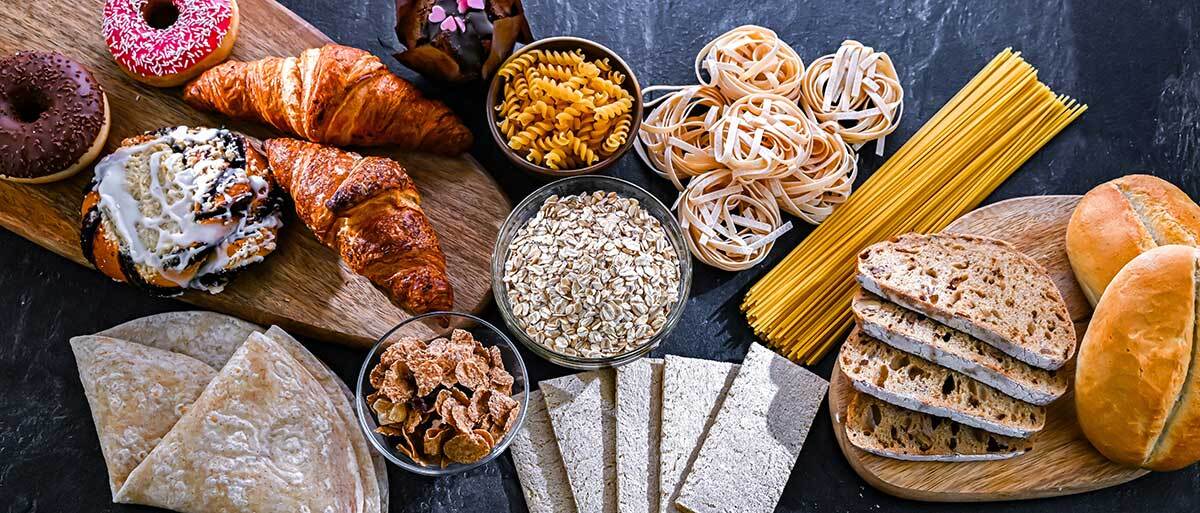
This gluten-free ingredient guide will help you navigate the grocery ailse.
gluten:
Gluten is a protein found in wheat, barley, and rye. It gives dough its stretchy, elastic texture and helps baked goods hold their shape.
Celiac Disease:
Celiac Disease is an autoimmune disease in which eating gluten triggers the immune system to attack the small intestine (and sometimes other areas). It is lifelong, and the only treatment is a strict, 100% gluten-free diet.
Other autoimmune conditions that sometimes overlap include type 1 diabetes, multiple sclerosis (MS), lupus, rheumatoid arthritis (RA), and psoriasis.
If you are unsure if you have celiac disease, take the Celiac Test.
Gluten Sensitivity (Non-Celiac Gluten Sensitivity or Gluten Intolerance):
You experience negative symptoms from gluten without having celiac disease or a wheat allergy. Research suggests it may affect 5–10% of the population, however the exact mechanism is still being studied.
Oats Note:
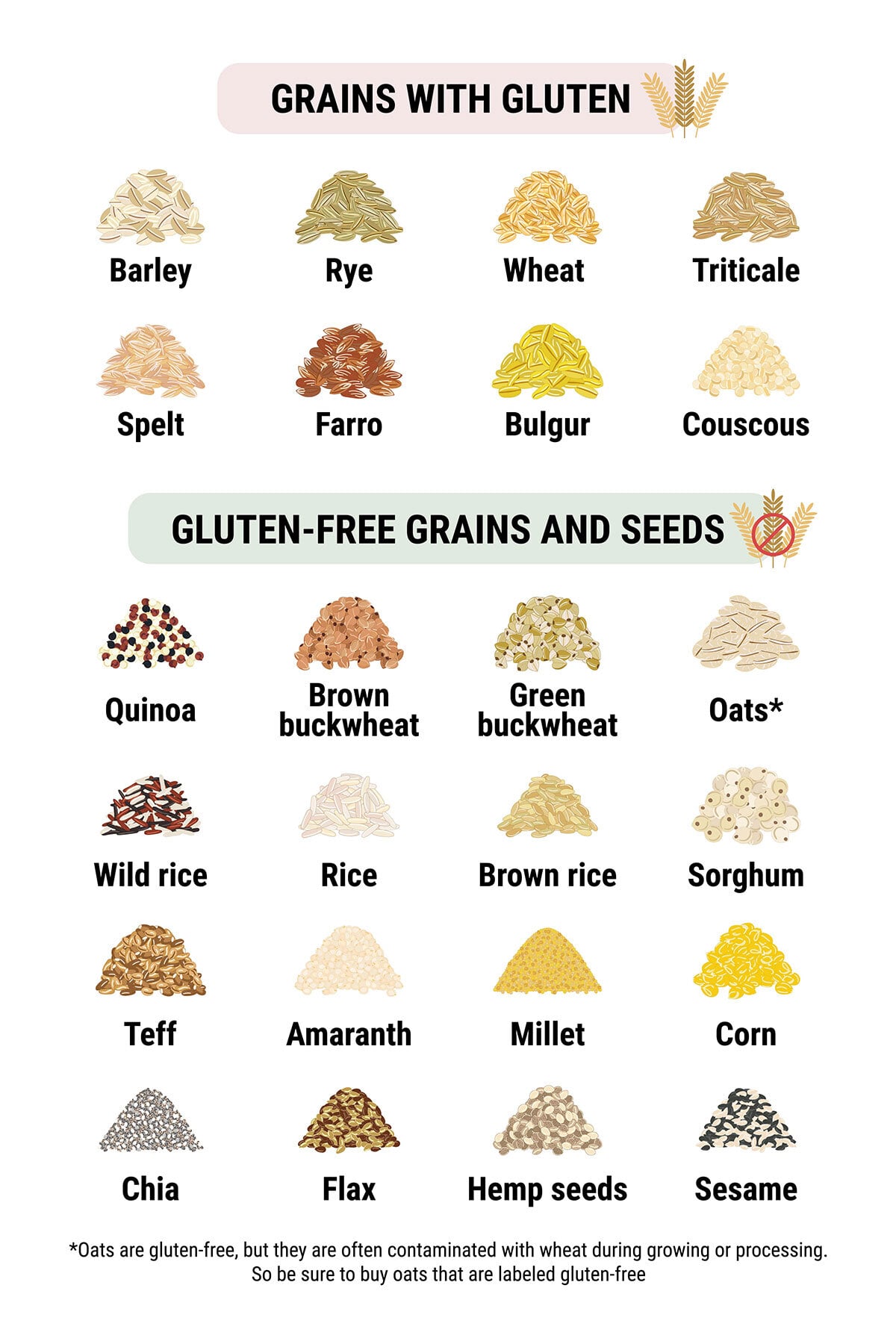
Although oats are naturally gluten-free they are often contaminated during growing or processing. Always choose certified gluten-free oats.
How to Read Gluten-Free Labels Like a Pro
In the U.S. and Canada, a product labeled “gluten-free” must contain less than 20 ppm of gluten.
Quick Label Checklist
- Look for the “gluten-free” claim on the front or ingredients panel.
- Scan the full ingredient list for any form of wheat, barley, rye, or malt.
- Check for “Contains: Wheat” statements (required for major allergens).
- “May contain” or “Processed in a facility that also handles wheat” is a voluntary warning — use your own judgment based on sensitivity level.
- Flavored or processed items (e.g., seasoned rice, deli meats) need extra scrutiny.
Red Flag Ingredients (even if no “gluten-free” label):
- Anything with “wheat,” “barley,” “rye,” “malt,” or “triticale.”
- Hydrolyzed wheat protein, barley malt extract, brewer’s yeast (unless certified gluten-free).
Pro Tip: Use apps like Gluten Free Watchdog or barcode scanners when shopping. When in doubt, contact the manufacturer.
Safe Naturally Gluten-Free Foods
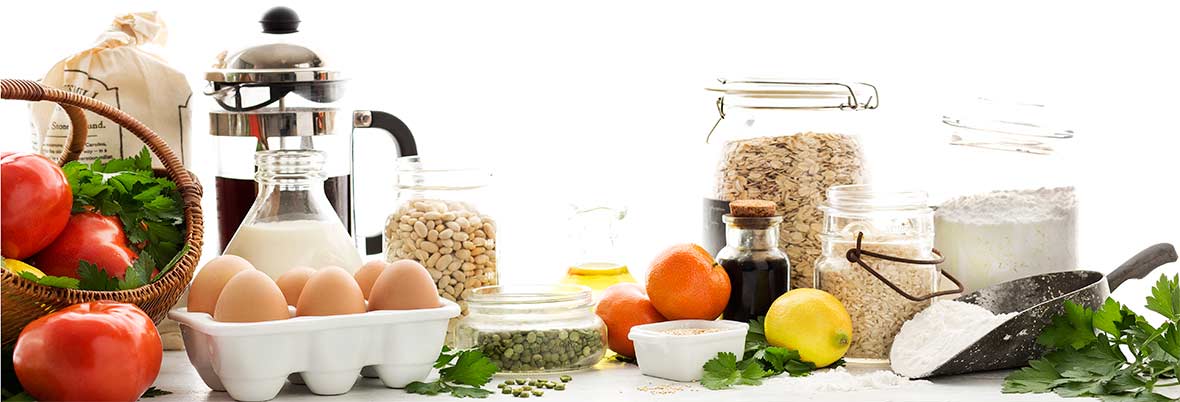
These whole foods are naturally gluten-free (always verify labels on processed or flavored versions):
- Baking & Pantry Staples: Baking soda, cream of tartar, pectin, lactose, lecithin, gums (xanthan, guar, acacia, carob bean, cellulose, locust bean).
- Proteins: Fresh meat, poultry, fish & seafood (unmarinated, unbreaded), eggs, tofu and plain soybeans.
- Dairy: Milk, buttermilk, cream, half & half, butter, most cheeses, plain yogurt (check flavored varieties).
- Produce: All fresh, frozen, or canned fruits and vegetables; pure fruit juices.
- Legumes: Dried or canned beans & lentils (check mixed or baked varieties).
- Nuts & Seeds: Fresh or roasted nuts, nut butters, nut flours (check labels), seeds and seed butters.
- Fats: All vegetable, nut, coconut, olive, and seed oils; margarines and shortenings (check labels).
- Sweeteners: Cane sugar, beet sugar, coconut sugar, honey, maple syrup, agave, molasses, stevia, and most sugar alcohols (erythritol, xylitol, etc.).
- Other: Coffee and tea (plain), distilled vinegars (malt vinegar is unsafe), spices (whole or ground, check blends), olives, pickles, salsa, hot sauce, most mustards, mayonnaise, ketchup, Lea & Perrins Worcestershire sauce (U.S. version), Wright’s Liquid Smoke.
Gluten-Free Grains, Flours & Starches
- Amaranth
- Arrowroot
- Bean flours (chickpea, pea, etc.)
- Buckwheat
- Cassava
- Chestnut flour
- Corn (including cornmeal and cornstarch)
- Glutinous rice (sweet rice)
- Millet Montina (Indian ricegrass)
- Nut flours
- Oats (only certified gluten-free)
- Potato flour and potato starch
- Quinoa
- Rice (all varieties: white, brown, wild)
- Sorghum
- Soy flour
- Tapioca (starch/flour)
- Taro
- Teff
- Yucca (cassava)
Unsafe Gluten-Containing Ingredients
Avoid these entirely on a gluten-free diet:
Grains & Flours:
- All-purpose wheat flour, bread flour, cake flour, pastry flour, self-rising flour, enriched flour, bleached flour, instant flour, organic flour, whole grain wheat flour, graham flour
- Barley; including barley malt, barley extract, barley grass, barley pearls, malt vinegar
- Rye
- Triticale
- Wheat; including durum, einkorn, emmer, farro, kamut, spelt, semolina, bulgur, farina, wheat berry, wheat bran, wheat germ, wheat protein, vital wheat gluten, seitan
- Couscous, matzo, tabbouleh, udon
Other Derivatives:
- Dextrin (unless specified gluten-free), hydrolyzed wheat protein, wheat starch (unless certified gluten-free)
Hidden Sources of Gluten in Common Foods
Gluten hides in many processed foods. Always check labels:
- Sauces & Condiments: Soy sauce (unless tamari or certified gluten-free), teriyaki, barbecue sauce, salad dressings, marinades, some mustards.
- Processed Meats: Deli meats, sausages, hot dogs, bacon, imitation crab or seafood, meatballs (often use fillers or breadcrumbs).
- Snacks & Breakfast Foods: Some potato chips (flavored), corn flakes or crisp rice cereals (barley malt), flavored coffees/teas, breakfast bars.
- Soups, Gravies & Seasonings: Canned soups, bouillon cubes, gravy mixes, seasoning blends, roux-based sauces.
- Other Common Culprits: Licorice, some chocolates/candies (barley malt or wheat-based fillers), blue cheese (sometimes), communion wafers, brown rice syrup (sometimes), natural flavors or caramel color (rare but possible).
Restaurant Caution: Shared fryers, marinades, thickened sauces, and cross-contact are common risks.
Gluten-Free Flour & Ingredient Substitutions
Single gluten-free flours rarely replace wheat 1:1. Blends or added binders (xanthan gum, psyllium) usually work best. Here’s a practical substitution chart:
Gluten-Free Flour Substitution Chart
Single gluten-free flours rarely replace wheat flour 1:1. Blends or added binders usually work best. Use this practical chart as a starting point for baking and cooking. Always test in your specific recipe, as results can vary by brand and humidity.
| Purpose | Best Gluten-Free Options | Notes & Tips |
|---|---|---|
| All-Purpose Baking (cakes, cookies, muffins, pancakes) |
1-to-1 gluten-free blends such as Carol’s Gluten Free All Purpose Flour, Bob’s Red Mill 1-to-1, King Arthur Measure for Measure, or homemade rice/tapioca/potato starch blend | Usually a direct 1:1 swap by weight or volume. Carol’s Gluten Free All Purpose Flour is a popular dairy-free, cup-for-cup blend that works well for a wide range of baked goods. Add ¼–½ tsp xanthan gum per cup if the blend doesn’t already include it. |
| Yeast Breads & Dough | Sorghum + tapioca starch + potato starch blends with psyllium husk or extra xanthan gum, or Carol’s Gluten Free All Purpose Flour | Higher-protein blends mimic wheat structure. Expect longer rising times and extra hydration. Psyllium often works better than xanthan for bread texture. Many bakers also use Carol’s blend successfully for yeast breads and pizza dough. |
| Cookies, Muffins & Quick Breads | Almond flour, coconut flour (use less), certified oat flour, sorghum flour | Coconut flour is very absorbent — use about ¼ the amount and add extra eggs or liquid. Almond flour gives moist, tender results. |
| Thickening Sauces, Gravies & Soups | Arrowroot powder, tapioca starch, potato starch, cornstarch | Arrowroot creates clear sauces. Potato starch works well for creamy textures. Add at the end of cooking and avoid boiling too long. |
| Binding & Structure | Xanthan gum, guar gum, psyllium husk powder | Start with ¼–½ tsp xanthan gum per cup of flour. Psyllium husk (about 1–2 tsp per cup) gives excellent bread-like texture but needs extra liquid. |
| Nut-Free Alternatives | Sunflower seed flour, pumpkin seed flour, or additional sorghum/rice blends | Good options for those with nut allergies. Use in moderation as seed flours can taste bitter in large amounts. |
Quick Baking Tips:
- Gluten-free baking usually needs extra moisture and eggs for structure.
- Weigh ingredients when possible (120 grams per cup is a common gluten-free flour weight).
- Results vary by brand — experiment and adjust liquid or binders as needed.
- Carol’s Gluten Free All Purpose Flour is a versatile 1-to-1 replacement that performs especially well for everyday baking.
Cross-Contamination & Kitchen Safety
Even tiny amounts of gluten can cause issues for many people.
Key Prevention Steps:
- Use dedicated gluten-free toaster, cutting boards, colanders, and utensils.
- Clean shared surfaces thoroughly.
- Avoid bulk bins and shared fryers in restaurants.
- Store gluten-free items separately.
- For oats and other grains, always buy certified gluten-free.
Download our free Setting Up Your Gluten-Free Kitchen guide for a complete checklist.

Bonus Resources & Recipes
- Explore our Full Recipe Index with dietary filters.
- Dairy-free & Dairy-free Adaptable Recipe Index
- Egg-free Recipe Index
- Soy-free Recipe Index
- Grain-free Recipe Index
- Reputable organizations: Celiac Disease Foundation, National Celiac Association, Gluten Intolerance Group, and Gluten Free Watchdog for the latest updates.
- Try these recipes that highlight safe ingredient swaps:

Frosting
Ingredients
- 2 sticks unsalted butter, , at room temperature
- 4-5 cups powdered sugar
- 2 teaspoons Singing Dog Vanilla Bean Paste
- ¼ teaspoon kosher or fine sea salt
- 3-5 tablespoons heavy cream
Instructions
- Put the butter in the bowl of a stand mixer preferably fitted with a paddle attachment and beat for 2 minutes, until very creamy. Add 4 ½ cups powdered sugar, 2 teaspoons vanilla bean paste, and salt. Add enough cream to achieve a spreadable consistency. If you add too much cream, beat in a little more powdered sugar.
- Frost cupcakes.
Nutrition
Nutrition information is automatically calculated, so should only be used as an approximation.

Air Fryer Gluten-free Falafel Balls
Ingredients
- 1- pound dried chickpeas
- ½ teaspoon baking soda
- 4 green onions, white and green parts, roughly chopped
- 4 garlic cloves, peeled and smashed
- 1 bunch Italian parsley, roughly chopped
- 1 bunch cilantro, roughly chopped
- 4 tablespoons BareOrganics Golden Flax Meal
- 2 teaspoons ground cumin
- 2 teaspoons kosher or fine sea salt
- 1 teaspoon ground coriander
- 1 teaspoon freshly ground black pepper
- 1 teaspoon baking powder
- Avocado oil spray or gluten-free nonstick cooking spray
Instructions
- A day before you plan to cook the falafel balls, put the chickpeas in a large bowl and cover them by a couple of inches with water. Stir in the baking soda. Cover and let sit for 12 – 24 hours. If it sits for more than 12 hours, change the water once.
- Drain and dry the chickpeas. Place them in the food processor with the green onions, garlic, parsley, cilantro, flax meal, cumin, salt, coriander, pepper, and baking powder. Pulse in long pulses several times until the mixture has the consistency of a coarse paste, scraping down the sides of the bowl often.
- Put the mixture into a bowl, stir with a fork, and remove any large pieces of chickpeas that may not have been processed. Cover and refrigerate for 30 – 60 minutes.
- Preheat the air fryer to 375 degrees.
- Form the falafel mixture into balls using about 2 tablespoons per ball.
- Spray the air fryer basket with oil spray, place a layer of balls into the basket, and lightly spray with more oil spray. Air fry for 6 minutes. Flip them over and air fry for another 6 minutes or until browned and crisp.
Nutrition
Nutrition information is automatically calculated, so should only be used as an approximation.
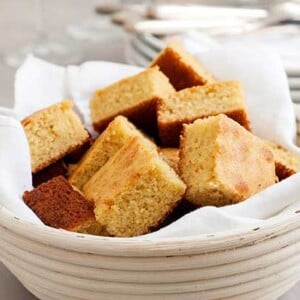
Gluten Free Grain Free Corn Free Cornbread Recipe
Ingredients
- Gluten-free nonstick cooking spray
- ½ cup unsalted butter or dairy-free butter, melted
- 3 tablespoons honey
- 3 large cage-free eggs
- 1½ cups blanched almond flour
- ½ cup tapioca starch or arrowroot starch
- 2 teaspoons grain-free baking powder, see note in blog post above
- ½ teaspoon kosher or fine sea salt
Instructions
- Preheat the oven to 350ºF. Grease an 8- or 9-inch baking dish generously with cooking spray.
- In a large mixing bowl, whisk all ingredients together until smooth. Pour into the prepared pan and bake for 20-25 minutes or until browned and the top feels firm to the touch. Let cool in the pan for 10 minutes.
- Cut into squares and serve.
Nutrition
Nutrition information is automatically calculated, so should only be used as an approximation.
ready to get cooking?
We hope you have found this gluten-free ingredient guide helpful! Have questions about a specific ingredient or substitution? Leave a comment below, we’re here to help!