


This post contains affiliate links. Please see our disclosure policy.
Why This Mineral Matters
Supporting Your Nutritional Needs Through the Midlife Years
Midlife can be an interesting time. Just when you think you have your routine figured out, your body sometimes seems to have other plans. Sleep may feel different. Stress can hit differently. And suddenly, paying attention to the basics- nutrition, movement, rest, and self-care- feels more important than ever.
One nutrient that deserves a place in that conversation is magnesium.
Magnesium is an essential mineral involved in more than 300 enzyme systems throughout the body, including processes related to protein synthesis, muscle and nerve function, blood glucose control and blood pressure regulation. It also contributes to bone structure and plays a role in energy production and normal heart rhythm.
And here’s a statistic that caught my attention: many Americans aren’t getting enough magnesium from their diets.
Are Americans Getting Enough Magnesium?
According to the National Health and Nutrition Examination Survey (NHANES), an analysis of data from 2013–2016 found that 48% of Americans of all ages consumed less magnesium from food and beverages than their respective Estimated Average Requirements (EARs).
Why Does Magnesium Matter?
Magnesium is a bit of an overachiever. It’s involved in hundreds of processes throughout the body, which means it’s not really about one particular benefit.
Instead, I think of magnesium as part of the nutritional foundation that helps support normal body functions.
Magnesium plays a role in:
- Normal nerve and muscle function
- Energy production
- Blood glucose control
- Bone structure
- Protein synthesis
- Normal heart rhythm
- Cellular processes throughout the body
For me, that’s what makes magnesium so interesting during the midlife years. Rather than looking for one magic ingredient, I’m interested in the nutrients that support the body’s normal functions as part of an overall healthy lifestyle.
Magnesium and the Midlife Years
The midlife years are a great time to reassess your nutritional habits.
Hormonal changes are a normal part of this stage of life, and they can make you more aware of things like sleep, stress, energy and overall well-being. That doesn’t mean one nutrient is going to solve everything. Far from it.
But it does make me think about the basics.
Am I eating a variety of nutrient-rich foods? Am I getting enough protein, fiber, fruits and vegetables? Am I staying active? Am I giving myself enough time to rest? And am I getting the essential vitamins and minerals my body needs?
Magnesium belongs on that list.
Where Can You Get Magnesium?
The good news is that magnesium is found in plenty of foods.
Some good sources include:
- Pumpkin seeds
- Chia seeds
- Almonds
- Cashews
- Peanuts
- Spinach and other leafy greens
- Black beans
- Whole grains
- Avocado
- Some fortified cereals
According to the NIH, green leafy vegetables, legumes, nuts, seeds and whole grains are among the better food sources of magnesium.
And there are some delicious options! Pumpkin seeds, for example, provide 156 milligrams of magnesium per ounce, while almonds provide 80 milligrams per ounce and cashews provide 74 milligrams.
Of course, individual nutritional needs vary. And for people who have dietary restrictions or digestive concerns, getting adequate amounts of certain nutrients from food isn’t always as straightforward.
That’s when it can be useful to talk with a healthcare professional about your individual nutritional needs.
What About Magnesium Supplements?
This is where things get interesting.
There are many different forms of magnesium supplements, and their absorption can vary. The NIH notes that some forms of magnesium are absorbed more completely than others.
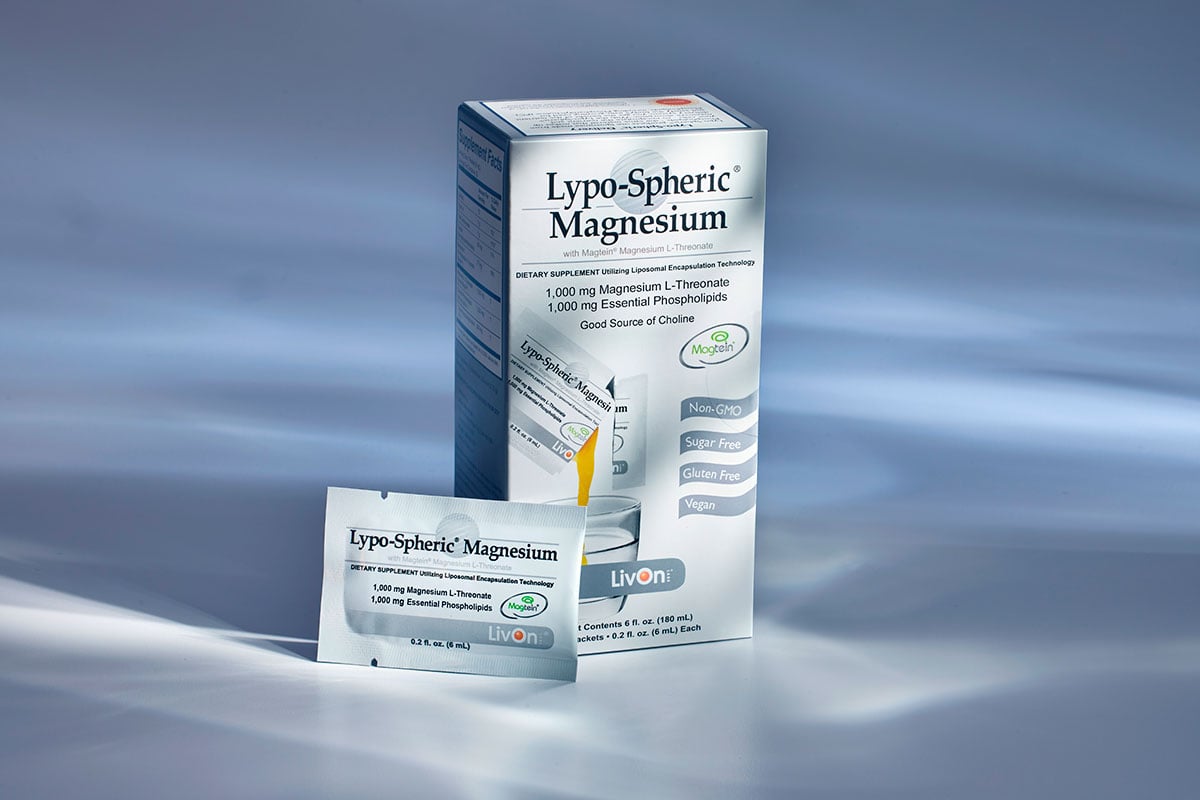
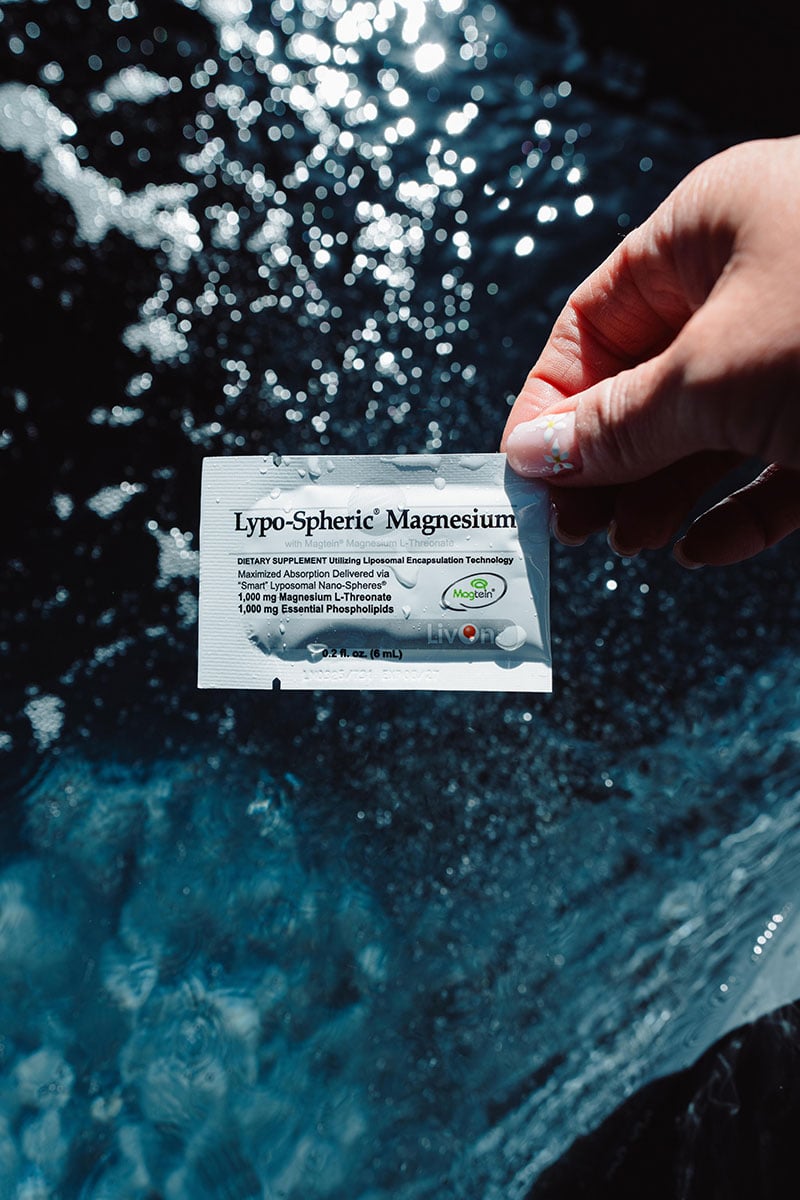
I became particularly interested in LivOn Labs Lypo-Spheric® Magnesium, which uses a liposomal delivery system.
Liposomal supplements use tiny lipid structures called liposomes to encapsulate nutrients. The idea behind this type of delivery is to support efficient absorption.
And I think absorption is an important part of the conversation.
It’s easy to look at the number on the front of a supplement package and assume that more is automatically better. But when it comes to nutrition, it’s also important to consider the form of the nutrient and how it is absorbed.
Why I’m Interested in Efficient Absorption
Our bodies are complicated, especially when we have celiac disease.
What we eat, how we digest food, and how well we absorb nutrients can all influence our nutritional status. Certain gastrointestinal conditions can increase the risk of magnesium inadequacy or magnesium depletion.
That’s one reason a delivery system designed to support efficient absorption caught my attention.
LivOn Labs Lypo-Spheric® Magnesium is formulated to support brain function, bone health, cellular health and nervous system function, while its liposomal delivery system is designed to support efficient absorption.
Those are the kinds of nutritional support claims I find much more meaningful than promises of a quick fix.
Magnesium and Stress
Let’s be honest: life doesn’t exactly get boring in midlife.
Work, family, finances, changing routines, and the general business of life can add up. And stress is another reason I think it’s worth paying attention to nutrition.
Making sure you’re getting adequate magnesium is one small part of taking care of yourself nutritionally.
I don’t think of magnesium as a magic solution for stress. Instead, I think about it as one of the essential nutrients my body needs as part of an overall approach to wellness.
Sometimes the basics really do matter.
What About Sleep?
Sleep is one of those things you don’t fully appreciate until it isn’t going as smoothly as you’d like.
Personally, I became interested in magnesium as part of my evening routine because I wanted to be more intentional about supporting my overall wellness and nervous system function.
I take a well-absorbed magnesium before bed, and I’ve found that it fits naturally into my nighttime routine.
That’s my personal experience, not a promise that everyone will have the same experience. When it comes to supplements, we’re all individuals, and what works for one person may not be appropriate for another.
If you’re experiencing ongoing sleep concerns, it’s always worth talking with your healthcare provider rather than assuming a supplement is the answer.
Magnesium and Bone Health
Bone health is another reason magnesium deserves attention during the midlife years.
Magnesium contributes to bone structure, and it plays a role in processes involved in bone formation. The NIH notes that diets providing recommended levels of magnesium enhance bone health, although more research is needed to understand the role of magnesium supplements in preventing or managing osteoporosis.
I like the idea of looking at health through a long-game lens: nourishing your body today while also supporting the things that matter years from now.
Magnesium for Brain and Cellular Health
There’s also something appealing about supporting the body at a fundamental level.
Magnesium is involved in energy production and numerous cellular processes. It’s also involved in normal nerve function.
Those aren’t flashy claims, and that’s exactly why I like them.
Your body is constantly working behind the scenes. Cells are producing energy, nerves are communicating, muscles are functioning, and countless biochemical reactions are taking place.
Magnesium is part of that incredibly complicated picture.
My Midlife Magnesium Takeaway
I’m not interested in finding a magic pill for midlife. What I am interested in is finding simple, realistic ways to support my body as it changes.
For me, that means paying more attention to nutrition, movement, sleep, stress management and the nutrients my body needs.
Magnesium is one of those nutrients that can be easy to overlook, even though it’s involved in hundreds of processes throughout the body.
And when NHANES data show that 48% of Americans consumed less magnesium from food and beverages than their respective EARs, I think it’s worth asking yourself a simple question:
Am I getting enough magnesium?
Start with your food. Look at your overall diet. And if you’re considering supplementation, talk with your healthcare professional about what makes sense for you.
For me, LivOn Labs Lypo-Spheric® Magnesium has become one part of my personal approach to supporting my nutritional needs during the midlife years.
It’s not about chasing a miracle.
It’s about giving your body the nutritional support it needs, and that’s something I think we can all get behind.
Frequently Asked Questions
Why is magnesium important?
Magnesium is an essential mineral involved in more than 300 enzyme systems in the body. It plays roles in nerve and muscle function, energy production, blood glucose control, bone structure and other normal body processes.
Are nearly half of Americans deficient in magnesium?
Not exactly. An analysis of NHANES 2013–2016 data found that 48% of Americans consumed less magnesium from food and beverages than their respective EARs. This is a measure of dietary intake, not a diagnosis of magnesium deficiency. The NIH notes that national data on magnesium status are not currently available.
What foods are high in magnesium?
Good food sources include pumpkin seeds, chia seeds, almonds, cashews, leafy green vegetables, beans and whole grains.
What is liposomal magnesium?
Liposomal magnesium uses liposomes, tiny lipid structures, to encapsulate nutrients. LivOn Labs uses this type of delivery system with its Lypo-Spheric® Magnesium.
What does LivOn Labs Lypo-Spheric® Magnesium support?
The product is formulated to support brain function, bone health, cellular health and nervous system function, with a liposomal delivery system designed for efficient absorption.
Should women in midlife take magnesium?
Everyone’s nutritional needs are different. If you’re concerned about your magnesium intake or are considering supplementation, talk with your healthcare provider about your individual needs.
A Note About Dietary Supplements
This article is for informational purposes only and is not intended to provide medical advice. Talk with your healthcare provider about your individual nutritional and health needs, particularly before beginning a new dietary supplement.
This product is not intended to diagnose, treat, cure, or prevent any disease.