

Celiac disease is a serious, genetic autoimmune disorder where eating gluten leads to severe damage in the small intestine. Unlike a food allergy or a temporary lifestyle preference, celiac disease is a lifelong medical condition. When someone with celiac disease consumes gluten, their immune system mistakenly attacks healthy tissue, destroying the body’s ability to absorb vital nutrients.
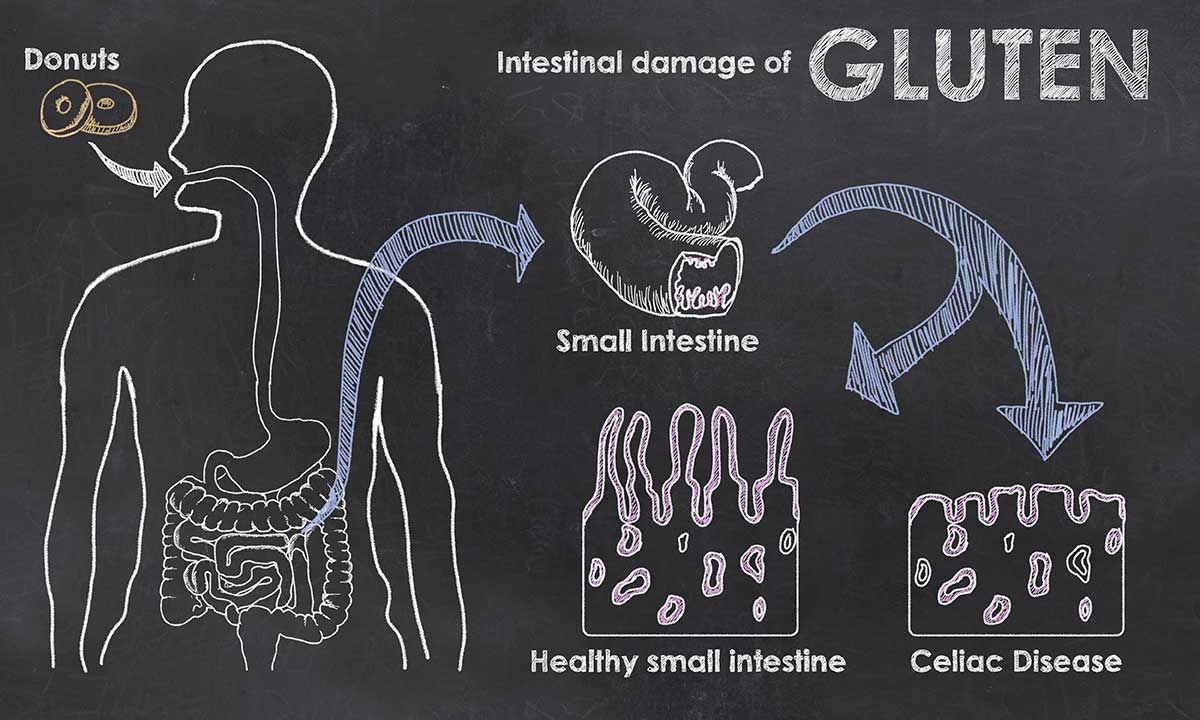
Table of Contents
At Gluten Free & More, our core philosophy is focusing on what you can eat rather than what you cannot. However, understanding the science behind this condition is the first step toward living a vibrant, healthy, and symptom-free life.
What Happens to the Body inside Celiac Disease?
When a person with celiac disease eats gluten, their body launches an immune response against its own tissues. This attack targets the villi—tiny, finger-like projections lining the small intestine.
Healthy villi act like microscopic sponges, capturing vitamins, minerals, and calories from your food. In an untreated celiac patient, these villi flatten out and become inflamed. Over time, this microscopic damage prevents the body from absorbing nutrients, leading to malnutrition, regardless of how much food is consumed.
Common Symptoms of Celiac Disease
Celiac disease is a shape-shifter. No two people experience it the exact same way. While some suffer from severe digestive issues, others display hidden, systemic signs that appear unrelated to gut health.
Classic Digestive Symptoms
- Chronic diarrhea or unexpected constipation
- Abdominal pain, cramping, and persistent bloating
- Nausea and regular vomiting
- Pale, foul-smelling, or fatty stools
- Unexplained weight loss
Non-Digestive (Systemic) Symptoms
- Chronic fatigue and severe “brain fog”
- Iron-deficiency anemia resistant to standard supplements
- Early-onset osteoporosis or bone density loss
- Joint pain and muscle stiffness
- Peripheral neuropathy (tingling or numbness in hands and feet)
- Dermatitis Herpetiformis, an intensely itchy, blistering skin rash
What is Gluten and Where is it Found?
Gluten is a naturally occurring structural protein complex found primarily in three grains:
- Wheat (including varieties like spelt, farro, and kamut)
- Barley (found in malt products and beer)
- Rye (commonly used in baked goods)
While plain oats do not naturally contain gluten, they are highly prone to cross-contact because they are routinely grown, harvested, and processed using the same equipment as wheat. Individuals with celiac disease must look for products specifically labeled certified gluten-free.
For more complete information, go to our Ultimate Guide to the Gluten-Free Diet and our Ultimate Gluten-Free Ingredient Guide.
How is Celiac Disease Diagnosed?
Important Safety Warning: Do not stop eating gluten before getting tested. If you remove gluten from your diet before your laboratory testing, your body will stop producing the specific antibodies doctors look for, resulting in a false-negative result.
The standard medical diagnosis is a two-step process:
- Serology Blood Tests: Doctors run simple blood tests to look for elevated Tissue Transglutaminase (tTG-IgA) antibodies. The body only creates these specific antibodies when actively fighting off gluten.
- Endoscopy with Biopsy: If your blood panel comes back positive, a gastroenterologist will perform a quick upper endoscopy. They collect small tissue samples from the intestinal lining to physically confirm if the villi are damaged or flattened.
Be sure to visit our pages on What to Do If You Can’t Get Tested for Celiac Disease or Gluten Sensitivity? and our Celiac Test.
The Only Proven Treatment: A Strict Gluten-Free Diet
Currently, there is no cure, pill, or medical shot that treats celiac disease. The only safe and effective treatment is a strict, lifelong gluten-free diet.
Eliminating gluten stops the autoimmune attack entirely. For most people, removing gluten allows the small intestine to fully heal, reverses chronic inflammation, and resolves daily symptoms. However, even microscopic cross-contact—such as using a toaster previously used for regular wheat bread, can re-trigger silent internal damage without causing noticeable symptoms.
Let’s Cook, Bake, and Live Well Together!
A celiac diagnosis can feel overwhelming, but you do not have to navigate this road alone. At Gluten Free & More, we turn dietary restrictions into absolute culinary freedom.
- Ready to cook? Browse our massive library of Gluten-Free Recipes.
- Check out our Ultimate Guide to Gluten-Free Baking
- Want expert advice delivered directly to your door? Subscribe to Gluten Free & More Magazine for cutting-edge medical updates, lifestyle tips, and delicious allergen-friendly meal plans.
Why Trust Gluten Free & More?
For more than two decades, Gluten Free & More has been helping readers navigate gluten-free living through tested recipes, practical education, and trusted ingredient guidance. Our editorial team regularly researches ingredient labeling, food safety recommendations, and gluten-free product standards to provide reliable information that helps readers make informed choices.
While ingredient formulations can change, we encourage readers to always verify product labels and consult manufacturers when questions arise.
Ingredient Guide Hub
Want to learn more about gluten-free ingredients and how to safely navigate your pantry? Explore more of our gluten-free ingredient guides below:
Gluten-Free Condiments & Sauces
- Is Soy Sauce Gluten-Free?
- Is Tamari Gluten-Free?
- Is Rice Vinegar Gluten-Free?
- Is Ponzu Sauce Gluten-Free?
Gluten-Free Baking Ingredients
Gluten-Free Grains & Basics
Explore More Gluten-Free Living Guides
- Ultimate Guide to the Gluten-Free Diet
- Setting Up Your Gluten-Free Kitchen
- Ultimate Guide to Gluten-Free Baking
Note
We regularly update our gluten-free guides to help you confidently identify safe ingredients, avoid hidden sources of gluten, and build a reliable gluten-free kitchen.
Last reviewed and updated: June 2026.