
Sudachi Ponzu Butternut Squash Stuffing

Published Nov 11, 2026
This post contains affiliate links. Please see our disclosure policy.
A Gluten-Free Thanksgiving Side Dish
Looking for a gluten-free Thanksgiving stuffing that brings something a little different to the holiday table? This Sudachi Ponzu Butternut Squash Stuffing combines roasted butternut squash, savory shiitake mushrooms, fresh herbs, and golden gluten-free bread with the bright citrus flavor of Marukan Sudachi Ponzu. It’s a delicious twist on traditional holiday stuffing that’s both comforting and unexpected.
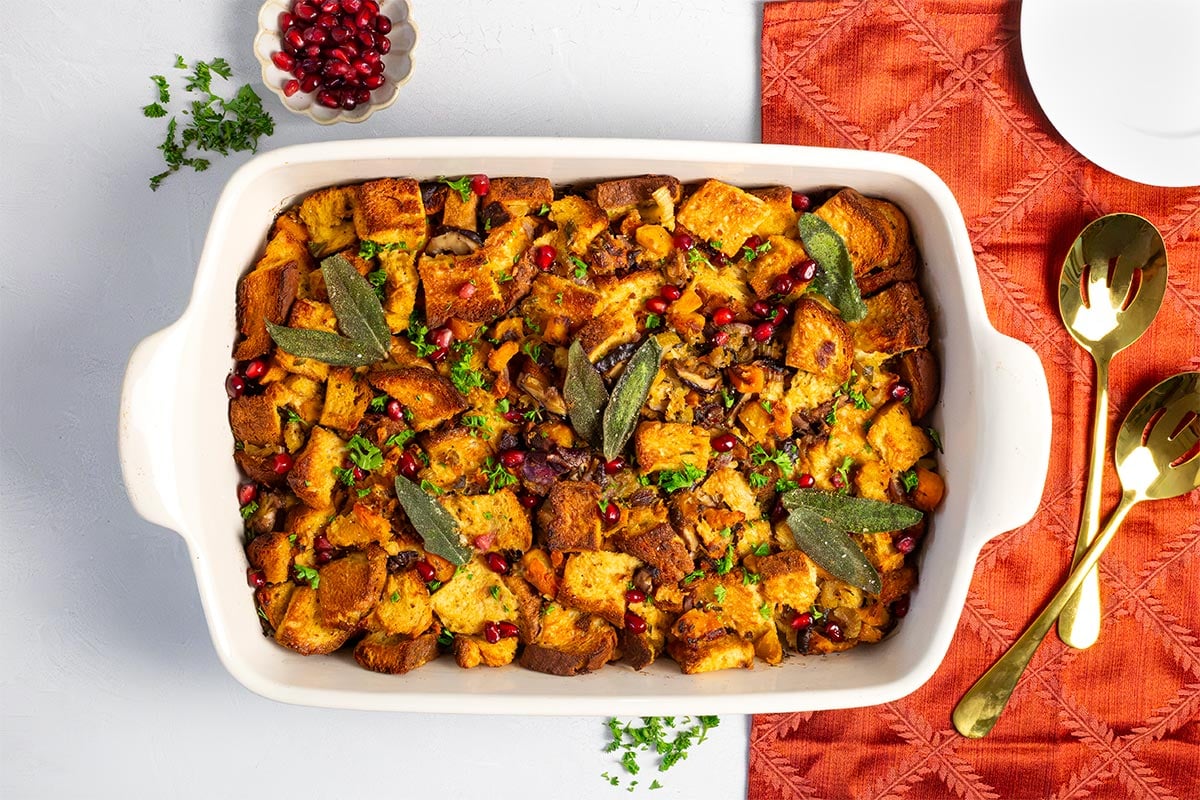
Table of Contents
- A Gluten-Free Thanksgiving Side Dish
- Why You’ll Love This Gluten-Free Butternut Squash Stuffing
- What Is Sudachi Ponzu?
- What You’ll Need
- Tips for Making the Best Gluten-Free Stuffing
- Can You Make Butternut Squash Stuffing Ahead of Time?
- Easy Variations and Substitutions
- What to Serve with Butternut Squash Stuffing
- Frequently Asked Questions
- A Fresh Twist on Thanksgiving Stuffing
- Sudachi Ponzu Butternut Squash Stuffing Recipe
The roasted squash adds natural sweetness, while the mushrooms, onions, and celery create a rich, savory base. Meanwhile, fresh sage, rosemary, and thyme bring all those familiar Thanksgiving flavors together. A splash of Sudachi Ponzu adds a subtle citrusy tang that balances the richness beautifully. Finally, crispy sage leaves, fresh parsley, and ruby-red pomegranate seeds make this gluten-free stuffing just as gorgeous as it is delicious.
Why You’ll Love This Gluten-Free Butternut Squash Stuffing
There’s something special about a homemade stuffing that combines traditional holiday flavors with a few unexpected ingredients. This version has everything you love about classic Thanksgiving stuffing, plus a fresh, flavorful twist.
- Perfect for Thanksgiving: Roasted squash, fresh herbs, and toasted bread make this a natural addition to your holiday menu.
- A delicious balance of flavors: Sweet butternut squash, savory mushrooms, and citrusy ponzu complement one another beautifully.
- Wonderful texture: Toasted gluten-free bread creates a satisfying stuffing with a tender center and crisp, golden edges.
- Beautiful presentation: Pomegranate seeds and crispy sage leaves add festive color and an elegant finishing touch.
- Easy to customize: With a few ingredient substitutions, you can adapt this dish to different dietary needs.
- Great for entertaining: This recipe serves eight, making it ideal for Thanksgiving dinner or another holiday gathering.
What Is Sudachi Ponzu?
Ponzu is a Japanese-style citrus sauce traditionally used to brighten everything from grilled vegetables to noodles and dipping sauces. Its combination of savory and tangy flavors makes it especially useful when you want to add depth without overwhelming a dish.
Marukan Sudachi Ponzu brings a distinctive citrus note to this butternut squash stuffing. Sudachi is a Japanese citrus fruit known for its bright, aromatic flavor.
In this recipe, the ponzu complements the sweetness of the roasted butternut squash and balances the richness of the butter. Additionally, it enhances the savory flavors of the shiitake mushrooms and fresh herbs.
The result is a Thanksgiving stuffing that still tastes comforting and familiar but has an extra layer of flavor.
What You’ll Need
This gluten-free butternut squash stuffing uses a combination of seasonal vegetables, fresh herbs, and a few pantry staples.
Gluten-Free Bread
The bread forms the foundation of the stuffing. Choose a sturdy gluten-free loaf that can be cut into cubes without falling apart.
Slightly stale or dried-out bread works particularly well because it absorbs the flavorful liquid while maintaining its structure. If your bread is still soft, you can toast the cubes in the oven before assembling the stuffing.
Butternut Squash
Butternut squash brings a naturally sweet, slightly nutty flavor to the dish. Roasting it first helps caramelize the edges and intensifies its sweetness.
For even cooking, cut the squash into approximately ½-inch cubes.
Shiitake Mushrooms
Shiitake mushrooms add a rich, savory flavor that makes this vegetarian-friendly stuffing especially satisfying when prepared with vegetable broth.
Cooking the mushrooms until golden brown also helps remove excess moisture, keeping the stuffing from becoming soggy.
Red Onion, Celery, and Garlic
These aromatic vegetables create the savory foundation of the dish.
Red onion adds a touch of sweetness, celery provides texture, and garlic brings everything together.
Fresh Sage, Rosemary, and Thyme
Fresh herbs are essential to the traditional holiday flavor of this stuffing.
Sage contributes an earthy, slightly peppery note, while rosemary and thyme add fragrance and depth. The crispy fried sage leaves used for garnish provide another layer of flavor and texture.
Marukan Sudachi Ponzu
This is the ingredient that makes the recipe stand out.
Marukan Sudachi Ponzu adds a bright citrus flavor that cuts through the richness of the stuffing and complements the roasted vegetables.
Because ponzu products vary in their ingredients, always check the label when preparing a gluten-free dish.
Butter or Dairy-Free Butter
Butter adds richness and helps cook the vegetables and crisp the sage leaves.
For a dairy-free version, use your favorite dairy-free butter alternative.
Chicken or Vegetable Broth
Broth provides the moisture needed to bring the stuffing together.
Choose gluten-free chicken broth for a traditional savory flavor or gluten-free vegetable broth for a vegetarian version.
Eggs
Lightly beaten eggs help bind the stuffing ingredients together as they bake, creating a cohesive texture while keeping the center tender.
Pomegranate Seeds and Fresh Parsley
These finishing touches make the dish especially festive.
Pomegranate seeds add little bursts of tart sweetness, while chopped parsley brings freshness and color. Together with the crispy sage leaves, they turn a simple casserole into a beautiful holiday side dish.
Tips for Making the Best Gluten-Free Stuffing
Start with Dry Bread
One of the most important steps in making gluten-free stuffing is using bread that’s sufficiently dry.
Fresh gluten-free bread can become overly soft when mixed with broth. Therefore, lightly toasting the cubes helps them absorb moisture without immediately turning mushy.
Roast the Butternut Squash Separately
Roasting the squash before adding it to the stuffing is worth the extra step.
The oven brings out its natural sweetness and creates lightly caramelized edges. As a result, the squash adds more flavor than it would if cooked directly in the stuffing mixture.
Don’t Rush the Mushrooms
Shiitake mushrooms release moisture as they cook. Give them enough time in the skillet for that moisture to evaporate and the mushrooms to develop a golden color.
This concentrates their flavor and prevents excess liquid from making the stuffing soggy.
Use Fresh Herbs
Although dried herbs are convenient, fresh sage, rosemary, and thyme give this recipe its distinctive holiday aroma.
The crispy whole sage leaves are especially delicious, so don’t skip the garnish!
Toss the Bread Mixture Gently
Gluten-free bread can be more delicate than traditional wheat bread.
When combining the bread, vegetables, and liquid mixture, use a gentle folding motion rather than stirring aggressively. This helps preserve the bread cubes and creates a better finished texture.
Add the Garnishes Just Before Serving
For the prettiest presentation, wait until the stuffing comes out of the oven before adding the pomegranate seeds, parsley, and crispy sage.
This keeps the pomegranate seeds bright and the herbs fresh.
Can You Make Butternut Squash Stuffing Ahead of Time?
Thanksgiving cooking is much easier when you can prepare a few components in advance.
Fortunately, several parts of this stuffing can be made ahead.
You can roast the butternut squash, toast the gluten-free bread cubes, and chop the vegetables and herbs the day before serving. Store the prepared ingredients separately in airtight containers, refrigerating the cooked vegetables and squash.
When you’re ready to bake, prepare the remaining components, combine everything, and bake according to the recipe.
For the best texture, I recommend adding the broth and egg mixture shortly before baking rather than letting the bread soak overnight.
Easy Variations and Substitutions
Make It Dairy-Free
Use dairy-free butter in place of regular butter. This simple substitution keeps the stuffing rich and flavorful without dairy.
Make It Vegetarian
Choose vegetable broth instead of chicken broth. The mushrooms, roasted squash, and fresh herbs provide plenty of savory flavor.
Add More Vegetables
For an even heartier stuffing, try adding sautéed leeks or finely chopped kale.
Just be sure to cook any additional vegetables before incorporating them so they don’t release too much moisture during baking.
Try Different Mushrooms
If shiitake mushrooms aren’t available, cremini mushrooms make a convenient substitute.
They have a milder flavor but still provide a delicious savory element.
Make It Vegan
The recipe can be adapted using dairy-free butter, vegetable broth, and an appropriate egg replacement. However, because eggs help bind the stuffing, a vegan version should be tested to confirm the texture before serving it for a special occasion.
What to Serve with Butternut Squash Stuffing
This flavorful gluten-free stuffing pairs beautifully with traditional Thanksgiving dishes.
Serve it alongside roasted turkey, gluten-free gravy, mashed potatoes, green beans, or roasted Brussels sprouts.
It’s also delicious with roasted chicken or a vegetarian holiday main course.
Because the stuffing includes roasted squash and fresh herbs, it works equally well for a cozy fall Sunday dinner or a festive Friendsgiving celebration.
Frequently Asked Questions
Yes, but it’s best to dry it out first. Toasting the bread cubes helps them absorb the broth and ponzu mixture without becoming overly soft. Sturdy gluten-free bread generally produces the best results.
Yes. Honeynut squash is a good alternative because it has a similar texture and naturally sweet flavor. Acorn squash can also work, although it may have a slightly different texture after roasting.
Roasting caramelizes the squash and concentrates its natural sweetness. It also removes some moisture, which helps keep the stuffing from becoming soggy.
Absolutely. If you don’t enjoy mushrooms, you can omit them or replace them with additional sautéed vegetables, such as celery or leeks. Keep in mind that the mushrooms contribute savory depth, so the finished flavor will be slightly different.
Not all ponzu sauces are gluten-free. Traditional ponzu may contain soy sauce made with wheat. Always check the specific product label and allergen information before using it in a gluten-free recipe.
You can prepare the individual components the day before. For the best texture, store the toasted bread separately from the cooked vegetables and squash. Then combine everything with the liquid mixture shortly before baking.
Transfer leftovers to an airtight container and refrigerate promptly. They can be stored for up to 3–4 days.
Place the stuffing in an oven-safe baking dish and add a small splash of gluten-free broth if it seems dry. Cover with foil and reheat at 350°F until the center reaches 165°F. Remove the foil for the last few minutes if you’d like to restore some of the crispy edges.
A Fresh Twist on Thanksgiving Stuffing
If you’re looking for a way to make your Thanksgiving menu a little more memorable, this Sudachi Ponzu Butternut Squash Stuffing deserves a place on the table.
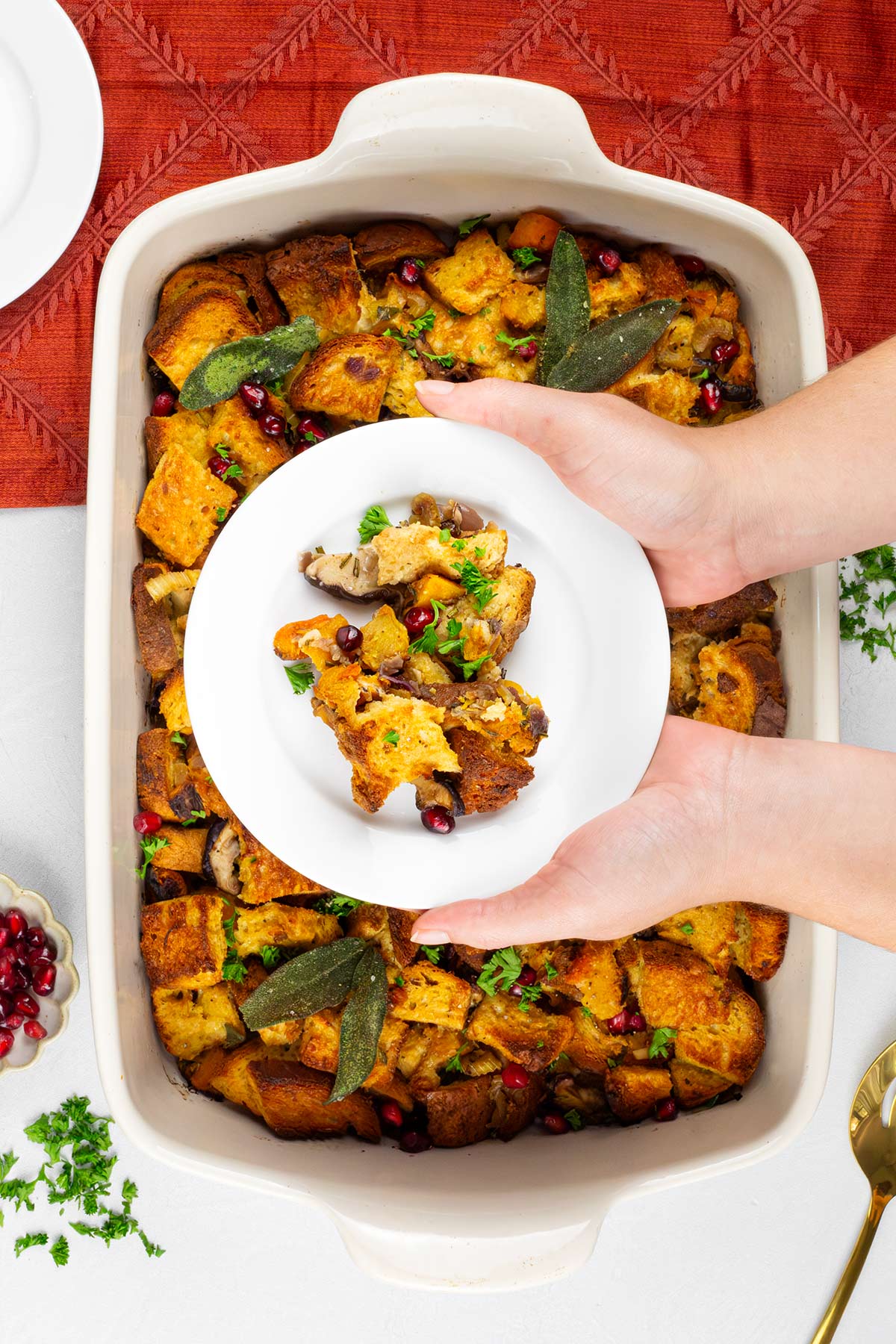
The combination of caramelized squash, savory mushrooms, fragrant herbs, and citrusy Marukan Sudachi Ponzu creates a dish that’s comforting yet refreshingly different.
Plus, the colorful pomegranate seeds and crispy sage leaves make it a beautiful addition to any holiday spread. Whether you’re hosting Thanksgiving or simply enjoying the flavors of fall, this gluten-free stuffing is sure to become a seasonal favorite.
Sudachi Ponzu Butternut Squash Stuffing
Ingredients
- Avocado oil spray or nonstick gluten-free cooking spray
- 2 tablespoons olive oil
- 4 cups butternut squash, peeled and cut into ½-inch cubes
- Kosher or fine sea salt and black pepper, to taste
- 1 loaf gluten-free bread, cut into 1-inch cubes
- 6 tablespoons butter or dairy-free butter, divided
- 12 fresh sage leaves
- 1 large red onion, diced
- 4 stalks celery, sliced
- 2 cups shiitake mushrooms, sliced
- 3 cloves garlic, minced
- 1 tablespoon chopped fresh sage
- 1 tablespoon chopped fresh rosemary
- 1 tablespoon chopped fresh thyme
- ⅓ cup Marukan Sudachi Ponzu
- 1 ½ cups chicken broth or vegetable broth
- 2 large eggs, lightly beaten
- ½ cup pomegranate seeds
- ¼ cup chopped parsley
Instructions
- Preheat the oven to 400°F. Spray a 9 by 13-inch baking pan with oil spray.
- Place the butternut squash on a large baking sheet. Drizzle with olive oil and season generously with salt and pepper. Roast for 25 to 30 minutes, stirring once halfway through, until caramelized and tender. Set aside.
- Reduce oven temperature to 375°F.
- Spread the gluten-free bread cubes on a baking sheet and toast for 10 minutes if they are not fully dried out.
- Meanwhile, heat 2 tablespoons butter in a large skillet over medium heat. Once melted, add the whole sage leaves in a single layer and fry for 30 to 60 seconds until crisp but not browned. Transfer to a paper towel-lined plate and lightly sprinkle with salt.
- Add the remaining 4 tablespoons butter to the same skillet. Add the red onion and celery and cook for 5 minutes until softened.
- Add the mushrooms and cook for 6 to 8 minutes until golden brown and the moisture has evaporated.
- Stir in the garlic, chopped sage, rosemary, and thyme and cook for 1 minute until fragrant.
- Place the toasted bread cubes in a very large bowl. Add the roasted butternut squash and vegetable mixture.
- In a separate bowl, whisk together the Marukan Sudachi Ponzu, broth, and eggs. Pour over the bread mixture and gently toss until evenly moistened.
- Transfer the stuffing to a greased 9 x 13-inch baking dish. Bake uncovered for 35 to 40 minutes until golden brown with crisp edges.
- Top with pomegranate seeds, chopped parsley, fried sage leaves, and freshly cracked black pepper just before serving.
Nutrition
Nutrition information is automatically calculated, so should only be used as an approximation.