
Sesame Kale Spring Rolls

Updated Mar 30, 2026, Published Apr 26, 2022
This post contains affiliate links. Please see our disclosure policy.
Fresh, Crunchy, and Packed with Bold Flavor
If you’re looking for a fresh, vibrant dish that’s as nourishing as it is delicious, these Sesame Kale Spring Rolls are a must-make. Loaded with crisp vegetables, tender rice noodles, and hearty kale, all wrapped in delicate rice paper, they’re the perfect balance of texture and flavor.
Paired with a rich, savory sesame dipping sauce, these spring rolls are light yet satisfying—ideal for lunch, dinner, or an impressive appetizer.
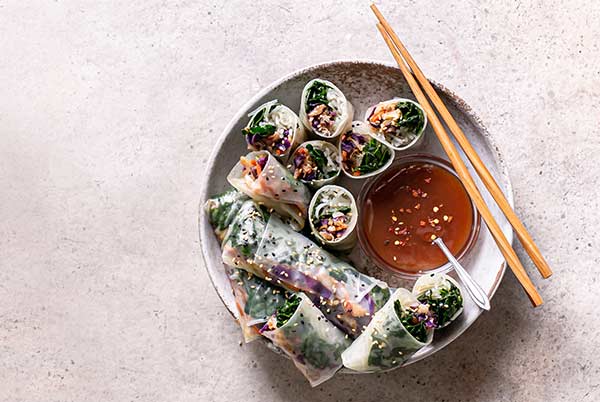
Table of Contents
Why You’ll Love These Spring Rolls
Fresh and Flavorful
Every bite is packed with crisp veggies, tender noodles, and a burst of sesame flavor that ties everything together beautifully.
Naturally Gluten-Free and Allergen-Friendly
These spring rolls are naturally gluten-free and can easily be made dairy-free, egg-free, and vegan, making them perfect for a wide range of dietary needs.
No Cooking Required (Almost)
Aside from softening the noodles, there’s no real cooking involved. That makes this recipe perfect for warm days when you want something fresh without turning on the oven.
What Makes These Spring Rolls Stand Out
Kale for a Nutrient Boost
Kale adds a hearty texture and a boost of nutrients, making these spring rolls more satisfying than traditional versions.
A Variety of Textures
You get crunch from fresh vegetables, chewiness from rice noodles, and a slight crispness from the kale, all wrapped in a soft rice paper wrapper.
The Sesame Dipping Sauce
The dipping sauce is what takes these spring rolls to the next level. It’s savory, slightly sweet, and nutty, with just the right amount of richness to complement the fresh ingredients.
What You’ll Need
To make these sesame kale spring rolls, you’ll need:
Rice paper wrappers
Rice noodles
Kale, finely chopped
Carrots, julienned
Cucumber, thinly sliced
Bell peppers, thinly sliced
Fresh herbs such as cilantro or mint
For the sesame dipping sauce:
Sesame oil
Gluten-free tamari
Rice vinegar
Honey or maple syrup
Fresh garlic
Fresh ginger
Optional chili paste or flakes for heat
These simple, wholesome ingredients come together to create a dish that’s both refreshing and satisfying.
Tips for Perfect Spring Rolls
Don’t Over-Soak the Rice Paper
Dip the rice paper briefly in warm water, it will continue to soften as you assemble.
Layer Thoughtfully
Place sturdier ingredients like kale first, then add noodles and softer vegetables for easier rolling.
Roll Tightly but Gently
Keep the rolls snug so they hold together but avoid tearing the delicate wrappers.
Keep Them Covered
Place finished rolls under a damp towel to prevent them from drying out.
Easy Variations
Add Protein
Include shrimp, grilled chicken, or tofu to make the rolls more filling.
Make It Spicy
Add sliced jalapeños or a drizzle of chili oil for extra heat.
Switch Up the Greens
Swap kale for spinach or mixed greens if you prefer a milder flavor.
When to Serve These Spring Rolls
These sesame kale spring rolls are perfect for:
Light lunches
Healthy dinners
Party appetizers
Picnics and potlucks
Meal prep
They’re portable, refreshing, and always a crowd-pleaser.
The last bite
These Sesame Kale Spring Rolls are proof that healthy eating can be both exciting and satisfying. With their fresh ingredients, bold flavors, and satisfying textures, they’re a recipe you’ll come back to again and again.
Whether you’re looking for a light meal, a nourishing snack, or a beautiful dish to share, these spring rolls deliver on all fronts, fresh, flavorful, and completely gluten-free.

Sesame Kale Spring Rolls
Ingredients
- 1 package japchae noodles, (Korean sweet potato glass noodles)
- 1 tablespoon sesame oil
- 1 teaspoon minced garlic, (about 1 large clove)
- 2 heaping cups coleslaw mix
- 1 tablespoon gluten-free soy sauce, (or coconut aminos for soy-free)
- 1 teaspoon rice vinegar
- ¼ teaspoon ground ginger
- 2 tablespoons scallions/green onions, chopped
- 1 tablespoon coconut sugar or pure maple syrup, (optional)
- 10 rice paper wrappers
For the Sesame Kale:
- 3 cups kale, packed (I used lacinato kale but you can use curly kale too)
- 1 tablespoon sesame oil
- ¼ teaspoon kosher or fine sea salt
- 1 teaspoon fresh lemon juice
Instructions
- Cook the japchae noodles according to the package directions. Drain, rinse, and set aside. While those are cooking, make the sesame kale mixture and the cabbage mixture.
- To make the sesame kale, wash and trim the kale, removing the stems and using the leaves only. Chop the kale into larger pieces and then place the kale leaves, sesame oil, salt, and lemon juice in a large bowl. Massage the kale for about 3-5 minutes, until the leaves turn a very dark green and they are softened. Set aside.
- In a large skillet, add the sesame oil and garlic and sauté on medium heat for a few minutes, until the garlic starts to turn golden. Add the coleslaw mix, soy sauce, rice vinegar, ginger, scallions, and coconut sugar or maple syrup (if using). Sauté until the cabbage is tender and no more liquid remains in the pan. Spoon the cabbage mixture into a bowl and place in the fridge for about 10-15 minutes to cool.
- Place a damp paper towel or tea towel on your counter or large cutting board. Fill another large skillet or a large shallow bowl with water. Soak a rice paper wrapper (one at a time) in the water for about 15 seconds until it softens. Carefully remove it from the water and place onto the damp towel and get it as flat as you can without ripping it.
- Place about 1 large tablespoon of the cabbage filling, 1 large tablespoon of the sesame kale, and about ¼ cup (maybe less) of japchae noodles in the center of the softened rice paper wrapper. The key is to not overstuff the rolls. Gently fold the bottom of the wrapper over the filling, then fold the sides over, and finally roll the rest of it from the bottom up. Repeat this step for the remaining rolls, until all the filling items are used up.
- Garnish with sesame seeds and serve the spring rolls with gluten-free sweet and sour sauce or soy sauce.
Notes
Nutrition
Nutrition information is automatically calculated, so should only be used as an approximation.