
Japanese Nabe (Hot Pot) with Ponzu Dipping Sauce and Seasoned Rice

Updated Jun 05, 2026, Published Oct 12, 2024
This post contains affiliate links. Please see our disclosure policy.
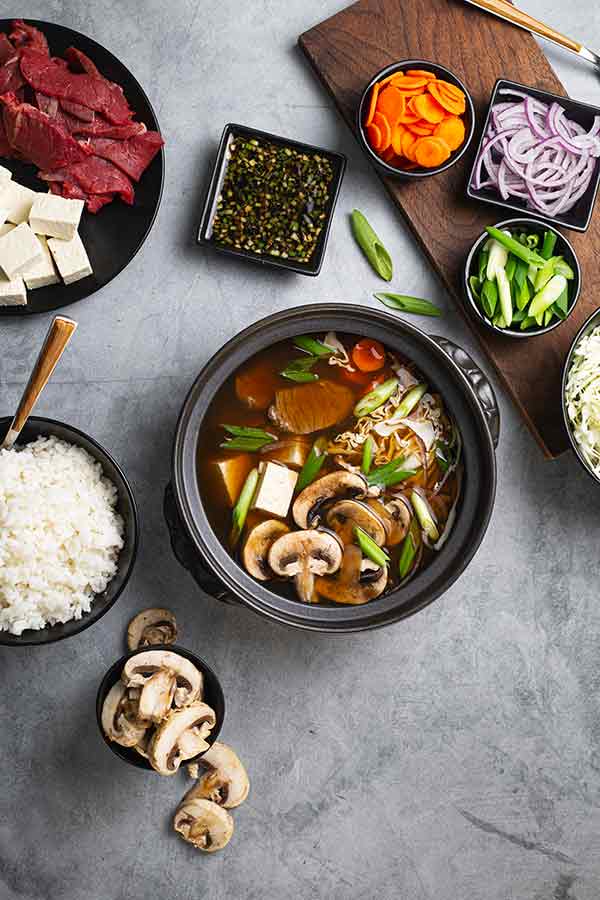
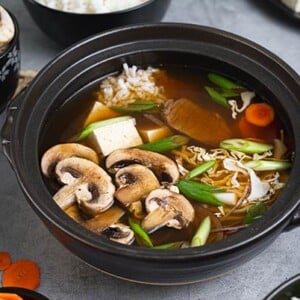
As the weather cools down, there’s nothing more comforting than gathering around a pot of steaming broth. You can cook a variety of fresh ingredients right at the table. This is the essence of Nabe, also known as Japanese hot pot. It is a communal meal where friends and family can enjoy flavorful broth, tender vegetables, and protein. All are dipped in a tangy sauce. If you’re looking for a truly authentic experience, try Japanese Nabe with Ponzu Dipping Sauce. You will get a perfect balance of flavors. In fact, Japanese Nabe with Ponzu Dipping Sauce is ideal for sharing with guests on a chilly evening.
Nabe has deep cultural roots in Japan, where it is particularly popular during the colder months. The word “nabe” literally means “pot,” and the dish has endless variations. These depend on the broth, vegetables, and proteins you choose. The beauty of Nabe is its flexibility—you can add meat, tofu, mushrooms, leafy greens, and any seasonal produce to the pot. Everything cooks together to create a dish that is both filling and full of flavor. To clarify, Japanese Nabe with Ponzu Dipping Sauce highlights the versatility of this hot pot style.
One of the key components of this recipe is the Ponzu dipping sauce, a tangy, citrus-based sauce that elevates the taste of the cooked ingredients. Made with Marukan Sudachi Ponzu, tamari, rice vinegar, ginger, and sesame oil, this dipping sauce balances the savory notes of the Nabe. It adds a refreshing, zesty finish. Each bite is a crazy good mixture of textures and flavors. You can always count on Japanese Nabe with Ponzu Dipping Sauce to impress your guests and please your palate.
I decided to add some seasoned rice to my Nabe – basically similar to sushi rice. It is seasoned with Marukan Seasoned Rice Vinegar, making this a complete meal.
Nabe is a great way to entertain – it is interactive dining, which makes for a great experience. Whether you’re enjoying it as a family meal or hosting a dinner party, Nabe is a great way to celebrate the season. For a memorable meal, Japanese Nabe with Ponzu Dipping Sauce is a top choice. Serve it with seasoned rice. Don’t forget to customize the ingredients to suit your preferences. For example, add tofu for a vegetarian twist or load it with your favorite veggies.
Dipping Sauce
Ingredients
- ¼ cup Marukan Sudachi Ponzu
- 2 tablespoons Marukan Genuine Brewed Rice Vinegar
- 1 tablespoon tamari or gluten-free soy sauce
- 1 teaspoon grated ginger
- 1 teaspoon sesame oil
- 1 tablespoon green onions, , very finely chopped
Instructions
- In a small bowl, combine Marukan Sudachi Ponzu, Marukan Genuine Brewed Rice Vinegar, soy sauce, grated ginger, sesame oil, and chopped green onions. Mix well and set aside.
Nutrition
Nutrition information is automatically calculated, so should only be used as an approximation.
Seasoned Rice
Instructions
- Pour 2 tablespoons Marukan Seasoned Rice Vinegar over the cooked rice and gently fold until the rice is evenly coated. Set aside.
Nutrition
Nutrition information is automatically calculated, so should only be used as an approximation.
Nabe
Ingredients
- 8 cups dashi broth
- 1 tablespoon tamari
- Kosher or fine sea salt and pepper to taste
- 1 pound thinly sliced ribeye or sirloin steak, (omit for vegetarian and vegan)
- ¼ head green cabbage, , thinly sliced
- 8 ounces mushrooms of your choice, , sliced
- 1 block firm tofu, , cut into cubes
- 2 carrots, , thinly sliced
- 1 red onion, , thinly sliced
- 4 green onions, , sliced
Instructions
- In a large pot or a Nabe pot, bring the dashi broth to a gentle simmer over medium heat. Season the broth with tamari, salt, and pepper to taste.
- Arrange the thinly sliced beef, cabbage, mushrooms, tofu, carrot, onion, and green onions on separate plates or on a platter.
- Once the broth is simmering, each diner can add ingredients of their choice into the pot to cook. Cook the ingredients until they are tender and cooked through. Thinly sliced beef typically cooks quickly, while vegetables and tofu may take a bit longer.
- Serve the Nabe hot with the dipping sauce and seasoned rice on the side.
Nutrition
Nutrition information is automatically calculated, so should only be used as an approximation.